
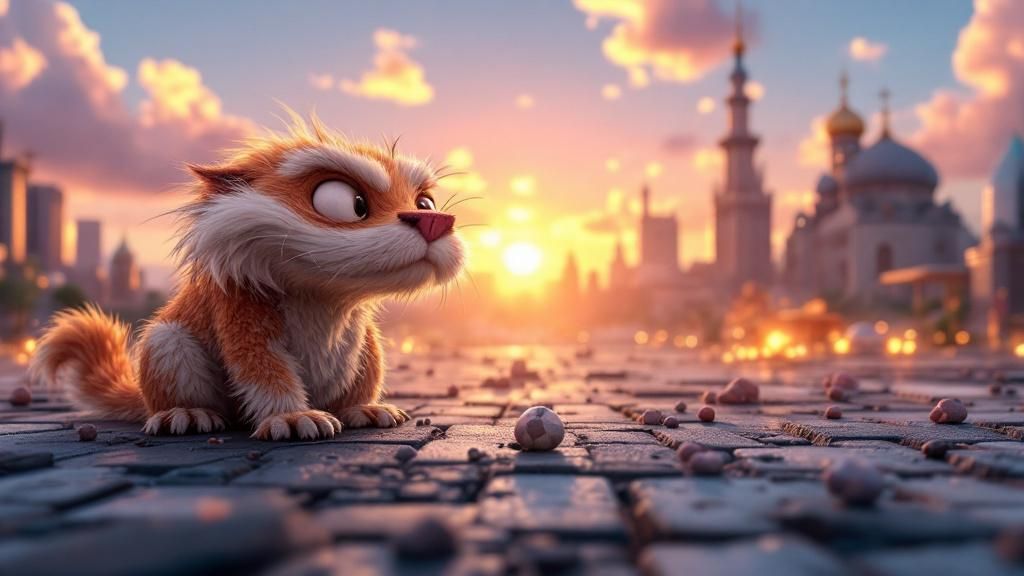
The animation industry is undergoing a significant transformation as studios utilise state-of-the-art visual effects technology to reimagine what’s possible on screen. From artificial intelligence-driven character animation to dynamic rendering engines, these innovations are revolutionising creative workflows and empowering artists to realise increasingly ambitious visions. This article investigates how top animation houses are utilising these groundbreaking tools to push artistic boundaries, improve narrative capabilities, and deliver visually striking experiences that attract audiences worldwide.
Advanced Rendering Methods Revolutionise Digital Storytelling
The animation industry is undergoing a profound shift as studios adopt revolutionary rendering technologies that fundamentally alter how digital narratives are crafted and presented. These innovative techniques allow creators to attain remarkable degrees of visual quality and authenticity, transforming the landscape of digital storytelling. By leveraging advanced computational techniques, animators can now generate imagery that matches live-action cinematography, whilst maintaining the creative flexibility that characterises animation as an creative discipline.
Contemporary visual innovations have made accessible access to professional-quality graphics, allowing independent creators to compete alongside major players. The accessibility of these tools has sparked a artistic revival, encouraging experimentation and artistic risk-taking across the sector. Studios are discovering novel ways to blend traditional animation principles with cutting-edge technology, resulting in unique aesthetic approaches that captivate audiences and expand the possibilities of what animation can achieve in contemporary entertainment.
Real-Time Ray Tracing Improvements
Real-time ray tracing marks a watershed moment in computer graphics, enabling animators to visualise complex lighting scenarios instantaneously rather than enduring lengthy processing times. This technological advancement has significantly sped up production workflows, enabling artists to make creative decisions with instant on-screen results. The capacity for viewing production-ready illumination in live preview fundamentally changes how animators execute their work, fostering enhanced creative authority and facilitating increasingly sophisticated visual storytelling.
The implications of real-time ray-tracing technology extend beyond mere technical efficiency, fundamentally reshaping the creative process itself. Studios can now iterate rapidly on visual ideas, experimenting with lighting designs and environmental atmospherics that would formerly demanded considerable processing time. This direct access has given creative teams greater freedom to pursue more daring story-telling methods, resulting in visually sophisticated narratives that extend the limits of what viewers anticipate from animated material.
- Photorealistic light computations process in real-time for immediate feedback
- Complex shadow interactions deliver exceptional spatial realism and dimensionality
- Advanced lighting algorithms generate naturally illuminated spaces with full fidelity
- Reflective surfaces show precise light response across various material surfaces
- Atmospheric effects integrate seamlessly with ray-tracing lighting technology
Artificial Intelligence Integration in Animated Content Creation
Artificial intelligence has established itself as a groundbreaking force within animation studios, significantly altering how artists approach character development, motion tracking, and visual storytelling. By streamlining repetitive workflows and offering smart recommendations for artistic improvement, AI technologies enable animators to focus on complex creative decisions whilst machines handle standardised technical operations. This symbiotic relationship between creative human input and machine intelligence has compressed project timelines markedly, permitting studios to complete sophisticated projects more efficiently without diminishing creative quality or visual fidelity.
The blending of AI into animated production processes has opened up availability to advanced VFX tools, empowering smaller studios to compete with established industry giants. Algorithmic processes analyse vast datasets of existing animations, recognising trends and improving render efficiency in ways that would prove impossible through manual labour alone. Moreover, intelligent software solutions enable simultaneous cooperation between international teams, transcending distance limitations and cultivating a broader collaborative space. As such innovations continue evolving, their potential to reveal new creative opportunities becomes ever more evident.
Artificial Intelligence for Character Creation
Machine learning algorithms have transformed character development processes by examining emotional nuances and physical movements with impressive precision. These systems can generate realistic facial expressions, body language, and gestural patterns based on large-scale training datasets, substantially reducing the time required for sequential frame work. Animators leverage these intelligent systems to create baseline character movements, which they then refine and customise, combining algorithmic efficiency with artistic human insight. This partnership model produces characters that feel genuinely living whilst maintaining the particular artistic style individual studios seek.
The use of AI technology goes further than basic character movement, covering personality development and consistent characterisation throughout sustained storylines. Complex algorithms examine script content and character backstory, recommending personality characteristics and emotional responses that correspond to existing character development. This AI support ensures story consistency whilst allowing animators to experiment with artistic interpretations and exploratory techniques. Animation houses cite significant gains in character authenticity and viewer emotional connection, proving that technology and artistry can authentically improve one another.
- Forecasting models predict character movements from minimal input data
- Deep learning systems generate lifelike facial features conveying emotional states
- Machine learning systems maintain uniform character conduct across productions
- Automated systems reduce manual animation labour by approximately sixty percent
- Artificial intelligence solutions enable rapid iteration and creative experimentation throughout development phases
Mocap Technology Achieves New Heights
Motion capture technology has experienced a substantial revolution in recent years, reshaping how animators create living characters. Contemporary systems now offer unprecedented accuracy and instant processing abilities, enabling studios to capture nuanced performances with remarkable precision. These advancements enable creators to translate human movement into animated figures with impressive accuracy, preserving the subtleties that create emotionally engaging acting and authentically compelling.
The combination of artificial intelligence with motion capture workflows has significantly improved creative possibilities. Studios can now process vast amounts of performance data immediately, enabling continuous improvement and experimentation at unprecedented speeds. This technological fusion has opened up high-quality motion capture, making complex animation approaches accessible to studios of diverse capacities and funding levels, ultimately enhancing the diversity of animated content available to audiences.
Volumetric Capture Systems
Volumetric capture represents a transformative evolution in how 3D performance information is captured and applied. Unlike traditional marker-based systems, volumetric capture documents complete scenes and performances as three-dimensional point clouds, providing unprecedented creative flexibility. This approach allows filmmakers and animators to move cameras, control lighting, and navigate spaces from countless different angles, fundamentally changing production workflows and creative decision-making.
The implementations of volumetric capture extend far beyond conventional animated characters. Studios are utilising this technology to record complex interactions between numerous performers, environmental elements, and sophisticated physical effects. The resulting information furnishes animators with extensive spatial detail, permitting them to create more believable interactions and intricate visual narratives that would be considerably more challenging using conventional motion capture techniques.
- Immediate volumetric rendering allows instant creative input and refinement
- Multi-camera systems capture movement from many concurrent angles
- Point cloud data enables flexible camera positioning in post-production work
- Combination with virtual production systems enhances teamwork processes significantly
- Greater positional precision improves performer interaction and environmental realism significantly
Sector Partnership and Upcoming Opportunities
The animation sector occupies a pivotal moment where partnerships among production houses, technology partners, and creative bodies is reshaping the landscape of visual storytelling. As cutting-edge VFX technology develops greater complexity, studios understand that shared knowledge and collaborative development drive advancement across the industry. This shared methodology fosters an environment where innovations advantage the entire industry, improving quality and permitting smaller production companies to access tools previously reserved for major production houses.
Looking ahead, the convergence of AI technology, cloud computing, and immediate visual processing promises significant potential for animation studios. Market experts anticipate that sustained commitment in cooperative research ventures will expand access to premium visual effects technology. The future landscape envisions a more interconnected ecosystem where organisations across all scales contribute to and benefit from technical innovations, ultimately expanding the creative possibilities open to directors and spectators alike.
Multi-Studio Creative Partnerships
Collaborative arrangements between animation studios represent a significant change in how the industry addresses technological development and artistic quality. By combining resources and knowledge, studios address complex technical challenges more efficiently whilst sharing the significant financial weight of research and development. These partnerships extend beyond simple resource pooling, fostering authentic knowledge sharing that enhances the sector’s overall capabilities and encourages ambitious experimentation with emerging technologies.
Successful collaborative ventures across studios show that competitive rivalry and teamwork may operate productively across the animated content industry. Collaborative production ventures, technical standards groups, and joint research ventures build foundations where companies preserve their competitive position whilst enhancing shared technical expertise. These collaborations offer considerable benefits for developing open-source tools and setting production standards that serve creators across all production scales and specialisations.
- Collaborative research programmes accelerate technological advancement and innovation
- Joint funding approaches reduce individual studio financial burden substantially
- Joint development projects establish industry standards and best practices
- Information exchange communities strengthen creative sectors and industry connections
- Open-access tool creation democratises access to premium visual effects
